
Load banks are your generator’s final stress test before critical construction phases. They’ll push your power source to its limits, revealing hidden weaknesses that could tank your entire project. You’ll simulate real-world electrical loads, checking voltage stability, temperature, and performance under pressure. Catching potential failures now saves you massive headaches later. Think of it like a generator physical – catching problems before they become catastrophic. Stick around, and you’ll learn why smart contractors never skip this.
Understanding Load Bank Testing Fundamentals

As generators are the lifeblood of construction sites, you’ve gotta know how to keep ’em running smooth. Load bank testing isn’t rocket science, but it’s critical.
Basically, you’re checking your generator’s performance under controlled conditions. No guesswork. You’ll simulate real-world electrical loads to verify the generator can handle its job when things get serious.
Think of it like a stress test for your machine. Temporary electrical loads expose potential weaknesses before they become massive problems on-site.
Portable load banks let you test power output, verify voltage stability, and catch weird electrical hiccups. Seriously important stuff.
Some generators look perfect sitting there, but under actual working conditions? They might tank faster than a rookie on his first job site. Load bank testing tells you what’s really going on.
Why Generators Require Regular Performance Evaluation
Load bank testing sets the stage, but regular generator performance checks? They’re your lifeline on the job site. Your equipment’s gotta be ready when everything depends on power. No excuses.
You can’t just assume your generator’s gonna crush it every time. Wear, environmental stress, and age take their toll. One dead generator means project delays, missed deadlines, and cash bleeding out. Who wants that headache?
Regular testing catches potential failures before they become massive problems. Think of it like a health check for your machine. You wouldn’t ignore your truck’s maintenance, right?
Same deal with generators. Catch issues early, save yourself a ton of grief. Proactive beats reactive, every single time.
Key Components of Effective Load Bank Testing
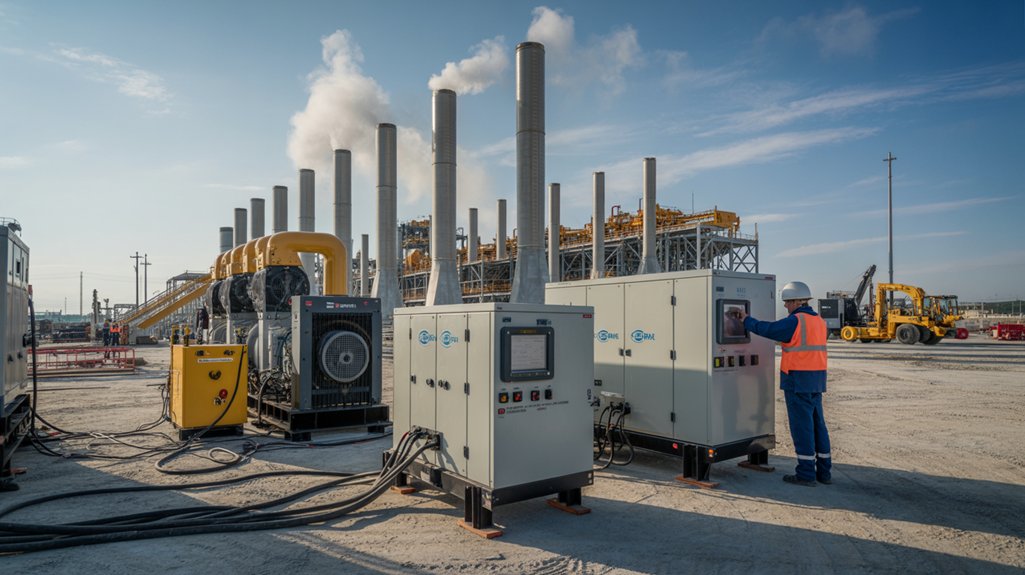
When you’re dealing with generator testing, knowing the key components isn’t just smart—it’s survival.
Load capacity matters big time. You’ve gotta test at full rated load, not some wimpy partial load that tells you nothing.
Resistance measurements are essential—they reveal hidden electrical gremlins waiting to sabotage your equipment.
Temperature monitoring? Non-negotiable. Generators get hot, and you need real-time data that shows exactly what’s happening under stress.
Voltage and frequency stability aren’t just techie buzzwords—they’re your lifeline on a job site.
Connections matter. Loose wiring equals potential disaster. Quick-disconnect cables, sturdy load bank interfaces, and solid grounding make the difference between a generator that performs and one that craps out when you need it most.
No compromises.
Benefits of Proactive Generator Diagnostics
As prevention beats repair every single time, proactive generator diagnostics can save your butt on the jobsite. Catching potential issues before they become massive problems isn’t just smart—it’s survival.
Load bank testing lets you spot electrical system weaknesses, cooling problems, and fuel delivery hiccups before they strand your crew. You’ll identify wear and tear that’d otherwise go unnoticed. No surprises. No unexpected downtime. Just clean, reliable power when you need it most.
Think of it like a health checkup for your generator. Minor tweaks now can prevent major breakdowns later. You’ll catch fuel system gunk, detect battery weakness, and verify voltage regulation.
This isn’t rocket science—it’s basic maintenance that keeps your equipment running smooth. Bottom line: proactive diagnostics are cheaper than emergency repairs.
Common Generator Issues Revealed Through Load Bank Testing

As generator issues can bite you in the worst moments, load bank testing exposes hidden problems faster than you’d believe. Critical failures lurk inside generators waiting to sabotage your construction project.
Wet stacking? Coolant problems? Fuel system gunk? Load bank testing catches these gremlins before they wreck your day. You’ll uncover wet stacking‘s telltale signs – carbon buildup and reduced performance.
Diesel generators especially need this diagnostic trick. Partial loads kill generator efficiency. Running a generator at low loads means incomplete fuel combustion. Bad news.
The load bank pushes your generator to its limits, revealing weak spots. Coolant circulation issues? Electrical connection problems? They’ll show up under serious stress.
No surprises on the job site. Just clean, reliable power when you need it most.
Best Practices for Implementing Load Bank Testing in Construction Projects
As load bank testing isn’t just another checkbox on your project clipboard, you’ll want a solid game plan before plugging in.
Listen up, for these practices are vital for keeping your generators running smooth:
- Schedule tests in non-essential project phases
- Always have a qualified technician present
- Match load bank capacity to generator specifications
- Document everything – no exceptions
Generators are temperamental beasts. They’ll bite back if you’re not careful.
Don’t just wing it and hope for the best. Proper testing means catching potential failures before they become massive headaches on the job site.
Want to avoid expensive downtime? Invest the time upfront.
Sure, it might seem like extra work, but trust me – one hour of testing beats days of repair and lost productivity.
No generator, no project. Simple as that.
