
A skid steer‘s your backyard landscaping beast, compact enough to squeeze through tight spaces but powerful enough to move massive rocks and level uneven ground. You’ll crush dirt removal, swap attachments faster than changing socks, and tackle projects that’d make a shovel cry. Buckets, grapples, augers, they’re your arsenal. But watch those slopes and wet ground. One wrong move, and you’re kissing mud. Stick around for the pro tips.
Skid Steer Capabilities for Home Landscaping
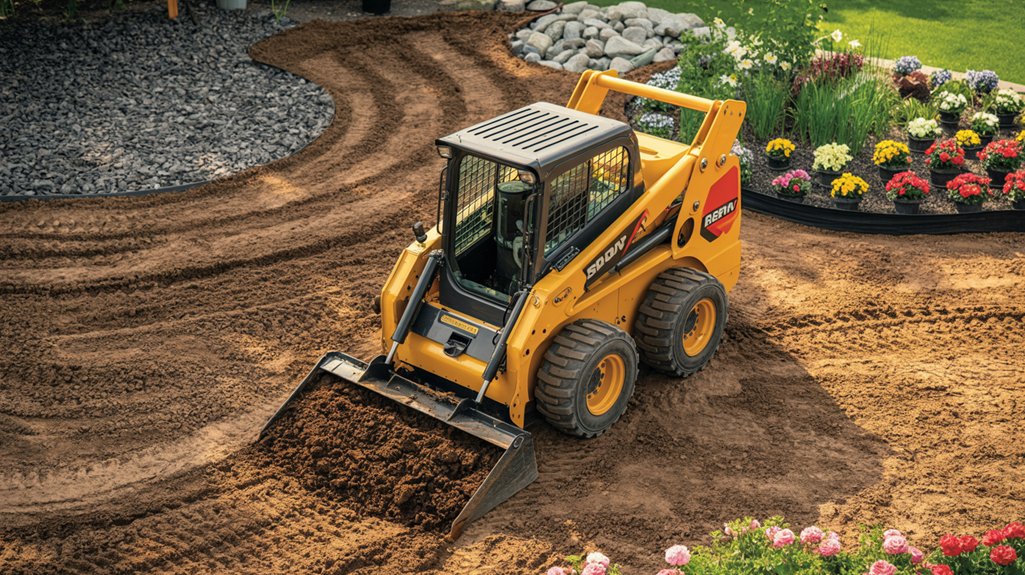
Although skid steers might seem like heavy-duty construction equipment, they’re actually incredibly versatile for backyard landscaping projects.
These bad boys can handle way more than you’d expect. Want to move massive rocks? No problem. Need to level out a lumpy yard? Easy peasy. Skid steers crush terrain challenges like nobody’s business.
Their compact size lets them squeeze into tight spaces where bigger machines can’t dream of going. You’ll get precision grading, quick dirt removal, and the ability to swap attachments faster than you can say “landscape transformation.”
Bucket attachments? They’ll move soil. Trenching attachments? Dig those drainage lines. Auger attachments? Plant trees like a pro.
Just keep in mind: these machines aren’t delicate flowers. They’re work horses that’ll turn your backyard into a masterpiece.
Essential Attachments for Backyard Projects
Now that you know skid steers are terrain beasts, let’s talk gear.
You’ll want attachments that make your backyard transformation a breeze. Buckets are your bread and butter – they move dirt, rocks, and debris like nobody’s business.
Grapple attachments? Killer for handling brush and logs. Augers punch perfect holes for posts or trees.
Trenchers slice through soil for drainage or irrigation work. Terrain rakes? They’ll smooth out ground faster than you can say “professional grade.”
Hydraulic tillers break up compacted earth like it’s nothing. And don’t forget the power of a good leveling blade – it’ll make your yard look sharp.
Pro tip: match your attachment to the specific job. Wrong tool? You’ll just make more work for yourself.
Terrain and Space Considerations
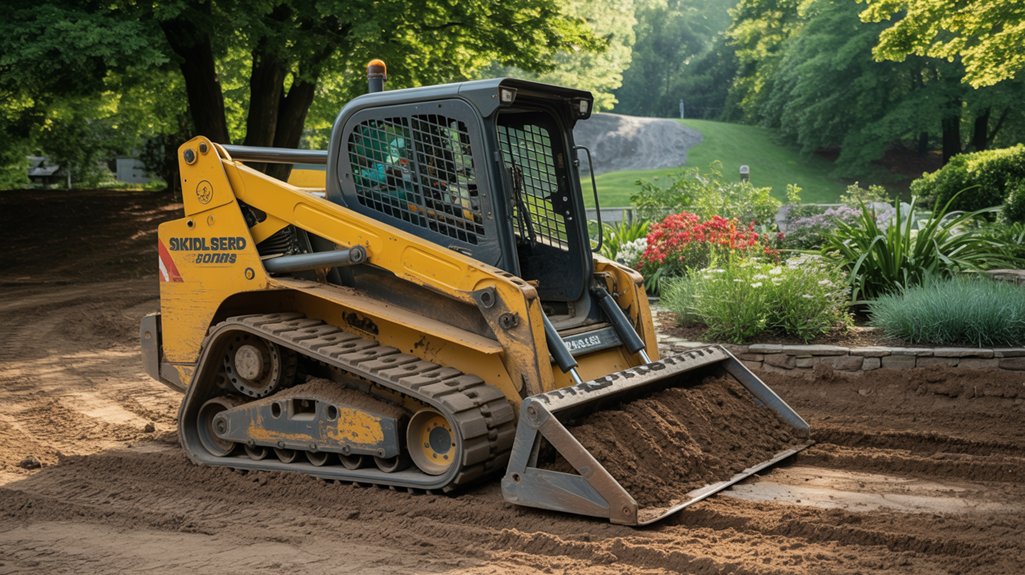
As not all yards are created equal, your skid steer’s success depends on understanding your terrain’s quirks.
Slope matters. Big time. A steep grade? You’re looking at potential stability issues that’ll make your machine tilt and dance in ways you don’t want.
Tight spaces? They’ll challenge even the most nimble skid steer. Measuring your yard beforehand isn’t just smart—it’s survival.
Soil composition is another beast. Clay? Heavy. Sandy? Loose. Rocky ground? Brutal. Each terrain type demands different approach and attachment strategy.
Your skid steer isn’t a miracle worker, but it’s close. Wet ground? Forget about it. You’ll just create mud ruts that’ll make your landscaping look like a disaster zone.
Know your ground. Respect the limits.
Safety Tips for DIY Landscapers
After wrestling with terrain challenges, you’ll want to keep all your body parts intact while operating a skid steer. Safety isn’t just a buzzword—it’s survival.
| Danger | Prevention |
|---|---|
| Rollovers | ROPS/FOPS protection |
| Flying Debris | Wear safety glasses |
| Unexpected Movement | Secure work area |
| Machine Blind Spots | Use spotter/mirrors |
| Mechanical Failure | Regular maintenance |
Listen up. These machines aren’t toys. One wrong move, and you’re looking at a trip to the ER. Always wear your hard hat, steel-toed boots, and tight-fitting clothes. No baggy pants that can snag on controls. Keep your head on a swivel. Check your surroundings constantly. Know your machine’s limits. Understand its weight, turning radius, and stability. Slow and steady wins the landscaping game. No cowboy moves.
Cost Analysis: Renting vs. Hiring Professionals
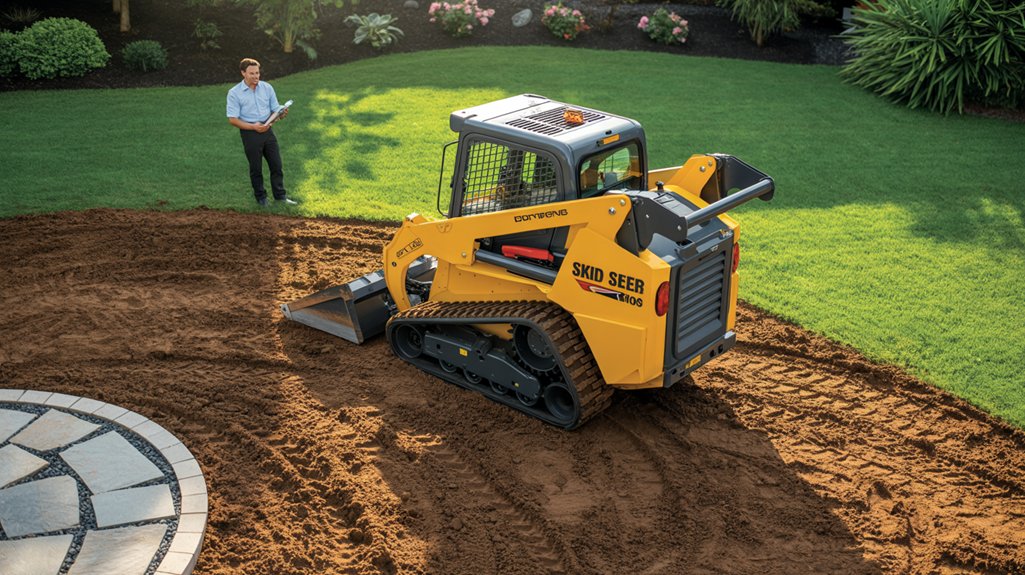
When you’re eyeing a skid steer for your backyard project, the big question hits you like a bucket of cold concrete: Should you rent or hire the pros?
Let’s break down the reality check:
- Rental costs average $200-$500 per day
- Professional service rates run $75-$150 per hour
- Your skill level matters – big time
Renting means you’re the boss.
But here’s the blunt truth: If you’ve never operated heavy machinery, you’ll look like a rookie. Mistakes happen. Expensive ones.
Professional outdoor designers know the drill. They’ll zip through the job faster, cleaner, with zero learning curve.
Your call.
Want to risk damaging your yard (or yourself)? Go rental.
Need precision and speed? Pros got this.
Just keep in mind: Confidence isn’t competence. And a skid steer isn’t a toy.
Common Landscaping Tasks Perfect for a Skid Steer
Weighing the rental versus pro debate earlier, you might wonder what jobs actually make a skid steer worthwhile. These beasts aren’t just for big construction sites—they’re landscaping game-changers. Right tool, right job. Period.
| Task | Efficiency | Skill Level |
|---|---|---|
| Grading | High | Moderate |
| Trench Digging | Very High | Low |
| Rock/Debris Removal | Extreme | Low |
| Soil Moving | High | Low |
| Garden Bed Prep | Moderate | High |
Seriously, a skid steer will demolish backyard projects faster than you can say “weekend warrior.” Need to level ground? Boom. Hauling heavy rocks? Done. Clearing out old landscaping? Child’s play. But here’s the real talk: you’ve gotta have some basic operating skills. No fancy degree required—just common sense and a steady hand. Not rocket science, just smart equipment use.
