
When you’re a small contractor, generator choice matters big time. Single-phase generators rock for lighter tools and small jobs, maxing out around 20 kilowatts – perfect for basic power needs. Three-phase generators? They’re the heavy-duty workhorses that’ll crush industrial equipment with smoother power delivery and less voltage drama. Your site’s specific demands dictate which beast you’ll need. Want the full technical breakdown that’ll save your wallet and workflow? Stick around.
Understanding Power Generation Basics
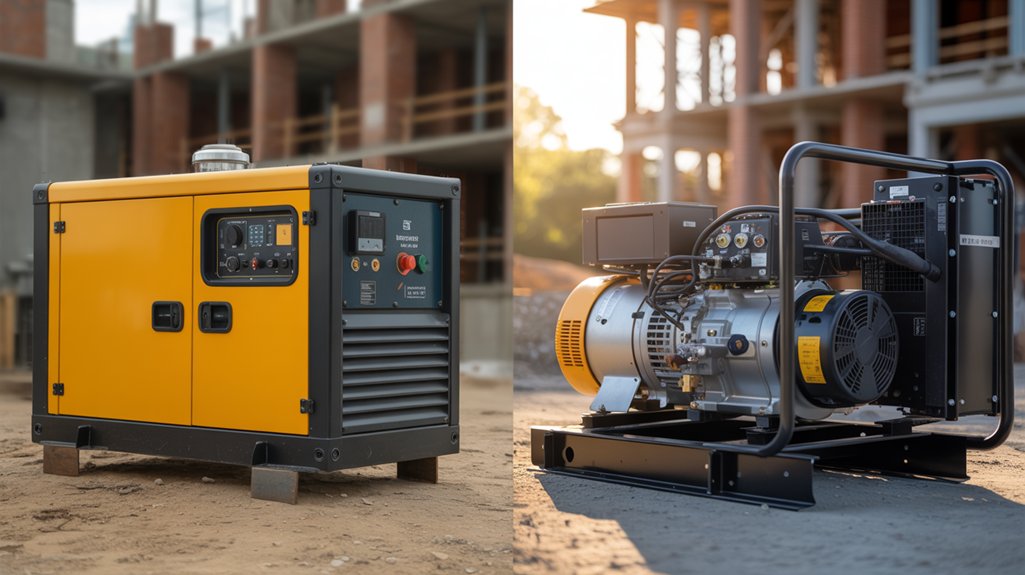
When it comes to power generation, you’ve got to know the basics before diving into the nitty-gritty of generator types.
Electricity isn’t magic—it’s science. You’re basically transforming mechanical energy into electrical power. Got it?
Generators convert rotational motion into electrical current. They’ve got components like rotors and stators that make the whole thing work.
Think of it like an engine, but instead of moving a truck, it’s pumping out watts. Some generators run on diesel, some on gas. Others use different fuel sources.
The core concept? Spinning something fast enough to create electrical potential. Sounds simple, right?
Well, it’s more complicated than changing a tire, but not rocket science.
Bottom line: generators turn motion into power. Period.
Key Differences Between Single-Phase and Three-Phase Systems
As generators aren’t one-size-fits-all, you’ll want to know the deal with single-phase and three-phase power systems.
They’re not just electrical mumbo-jumbo—these systems matter big time for contractors. Here’s the lowdown:
- Single-phase systems work great for smaller loads like tools and portable equipment.
- Three-phase systems deliver more consistent power and handle heavier machinery.
- Voltage distribution differs drastically between these two power configurations.
Single-phase power’s fundamental. One electrical circuit. Simple. Clear-cut.
Three-phase? More complex. Multiple circuits running simultaneously. Smoother power delivery. More efficient.
Seriously, if you’re running bigger job sites with heavy-duty equipment, three-phase generators are your go-to.
They’ll handle industrial-grade tools without breaking a sweat. Less strain. More power. Less downtime.
Bottom line: know your power needs before picking your generator.
Performance Capabilities of Single-Phase Generators
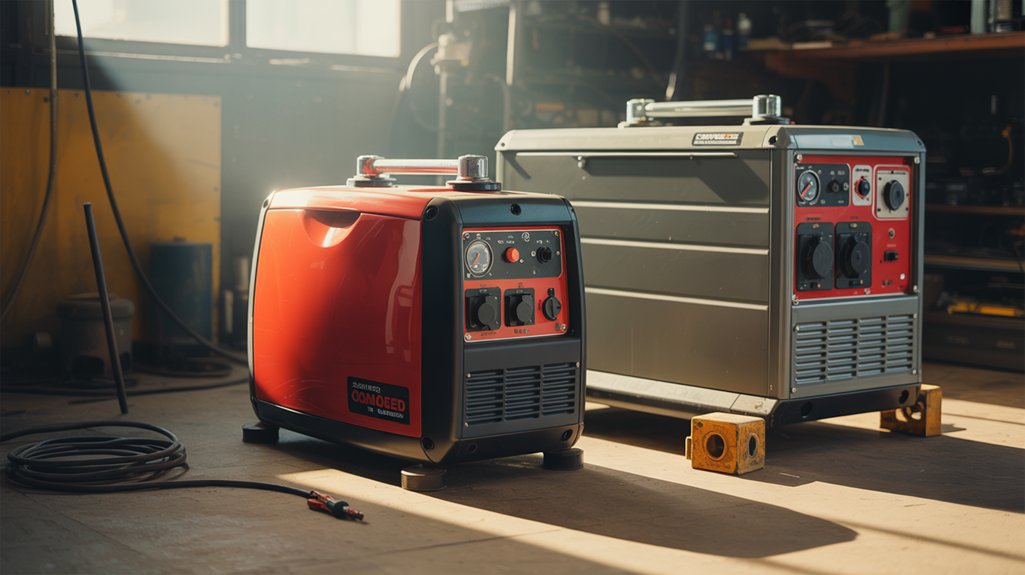
As single-phase generators aren’t powerhouses like their three-phase cousins, they’ve got specific performance limits you’ll want to understand.
They’re basically the compact pickup trucks of power generation – decent for small jobs, but not hauling massive electrical loads. You’ll find these generators typically max out around 20 kilowatts, which means they’re perfect for residential sites, small workshops, and basic contractor needs.
Lightweight and portable? Absolutely. Capable of running heavy industrial equipment? Not a chance. They’ll handle your standard power tools, some lighting, and perhaps a few smaller machines without breaking a sweat.
But push them too hard, and they’ll tap out faster than a rookie on his first construction site. Single-phase generators shine in situations where you don’t need massive electrical muscle – just reliable, uncomplicated power.
Advantages of Three-Phase Power Solutions
As industrial powerhouses demand serious electrical muscle, three-phase generators absolutely crush single-phase systems in performance and efficiency.
You’ll notice these bad boys pack a serious punch for heavy-duty applications. Check out why three-phase power solutions dominate:
- Smoother power delivery with balanced electrical loads
- Higher power capacity without massive generator size
- Reduced electrical stress on connected equipment
These generators aren’t playing around. They handle massive industrial machinery like it’s nothing. More consistent power. Less voltage fluctuation. Pure electrical muscle.
Three-phase systems mean you’re running serious equipment without breaking a sweat.
Whether you’re powering construction sites, manufacturing plants, or large commercial spaces, these generators deliver the goods. No nonsense. No compromise. Just raw, reliable electrical power that keeps your operation running tight and right.
Cost Considerations for Contractors
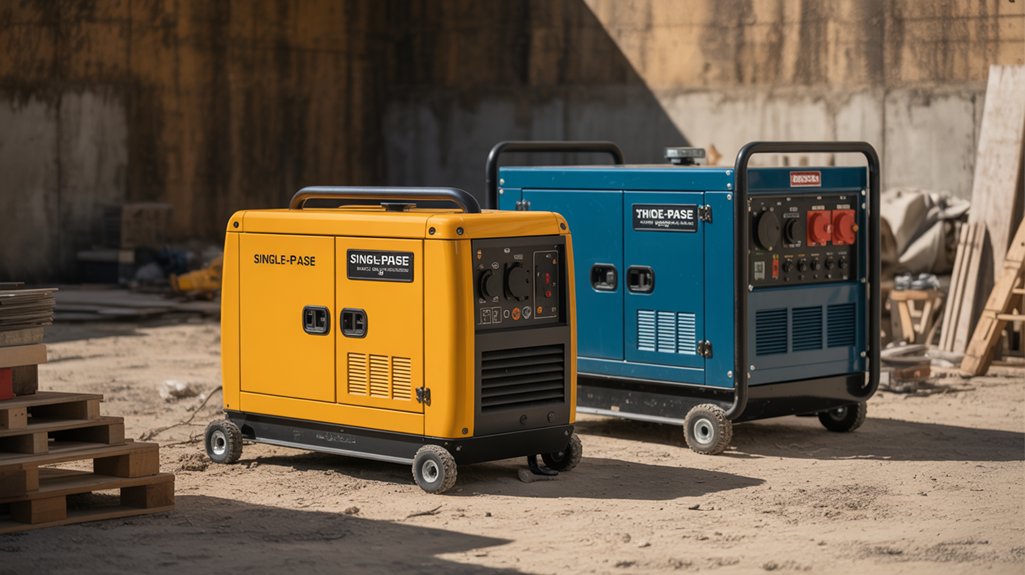
When diving into generator costs, contractors know it’s not just about sticker price—it’s about total investment.
Single-phase generators might look cheaper upfront, but they’re like a budget tool that’ll make you cry later. Three-phase systems cost more initially, sure. But they’re efficient workhorses that can handle serious job site demands without breaking a sweat.
You’ll see lower operational expenses and less downtime. Reflect on fuel consumption—three-phase generators typically run more efficiently, which means more money stays in your pocket.
Performance matters. A cheap generator that can’t handle your workload? That’s just throwing cash out the window.
Bottom line: Don’t just look at the price tag. Contemplate long-term performance, reliability, and the real-world demands of your specific contracting work.
Equipment Compatibility and Power Requirements
As power isn’t a one-size-fits-all deal, you’ve gotta know what your equipment needs before grabbing any generator. Your gear dictates everything, so pay attention:
- Single-phase works for smaller tools and standard job site equipment
- Three-phase handles heavy-duty machinery like large compressors and industrial welders
- Voltage requirements matter more than you might think
Don’t just wing it and assume all generators are created equal. They’re not. Your delicate electrical equipment can get fried faster than bacon if you pick the wrong setup.
Contractors who skimp on understanding power compatibility end up with expensive paperweights. Seriously. One wrong move, and you’re looking at replacing thousands in equipment.
Matching your generator’s output to your specific machinery isn’t rocket science—it’s just smart work. Know your watts, know your phases, and you’ll be golden.
Efficiency and Energy Management
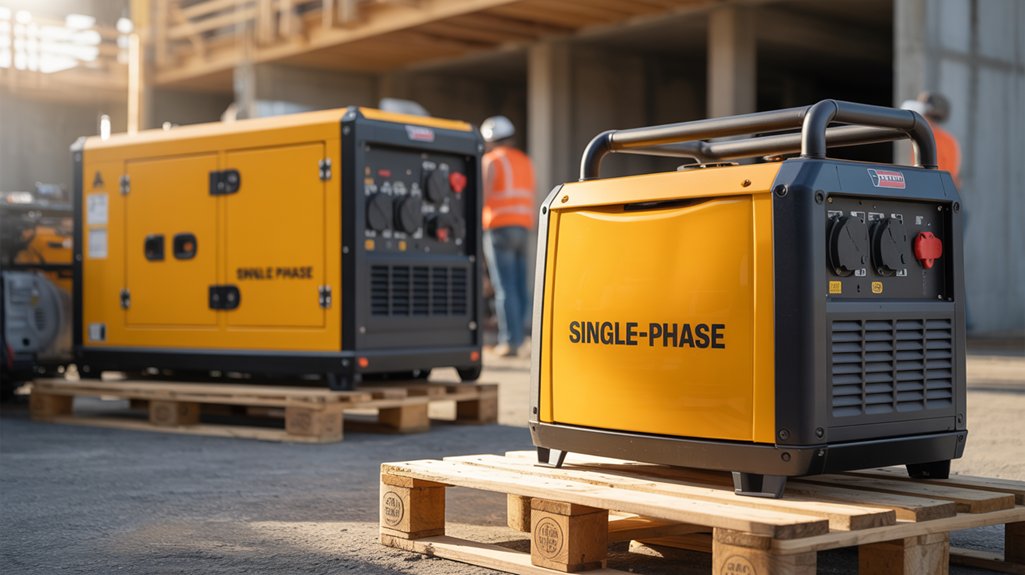
Owing to the fact that generators aren’t just about raw power, efficiency becomes a game-changer in energy management. When you’re running equipment on a jobsite, every watt counts.
Single-phase generators typically have lower efficiency ratings compared to three-phase units. You’ll burn through more fuel, which means more cash out of your pocket.
Three-phase generators distribute electrical load more evenly. Less strain on the system. Smoother power delivery. They can handle bigger loads without breaking a sweat.
Want to run multiple power tools simultaneously? Three-phase is your buddy.
Fuel consumption matters. A lot. Single-phase generators might seem cheaper upfront, but they’ll nickel and dime you with higher operating costs.
Energy management isn’t rocket science—it’s about smart choices that keep your bottom line lean and mean.
Job Site Application Scenarios
As construction sites are a wild ecosystem of power demands, your generator choice can make or break your workflow.
Listen up, as generator selection isn’t just some boring technical decision—it’s about surviving the job site power game.
Your generator needs depend on specific scenarios:
- Residential renovation? Single-phase might cut it.
- Industrial complex build-out? Three-phase is your beast.
- Remote site with mixed equipment? You’ll want flexibility.
Small contractors know the drill: power isn’t negotiable. Your tools won’t run on wishes.
Single-phase works for lightweight jobs, but when serious machinery enters the picture, three-phase becomes your lifeline. No compromises. No excuses.
The right generator means smooth operations, less downtime, and keeping your crew moving. Efficiency isn’t just a buzzword—it’s survival.
Technical Specifications to Evaluate
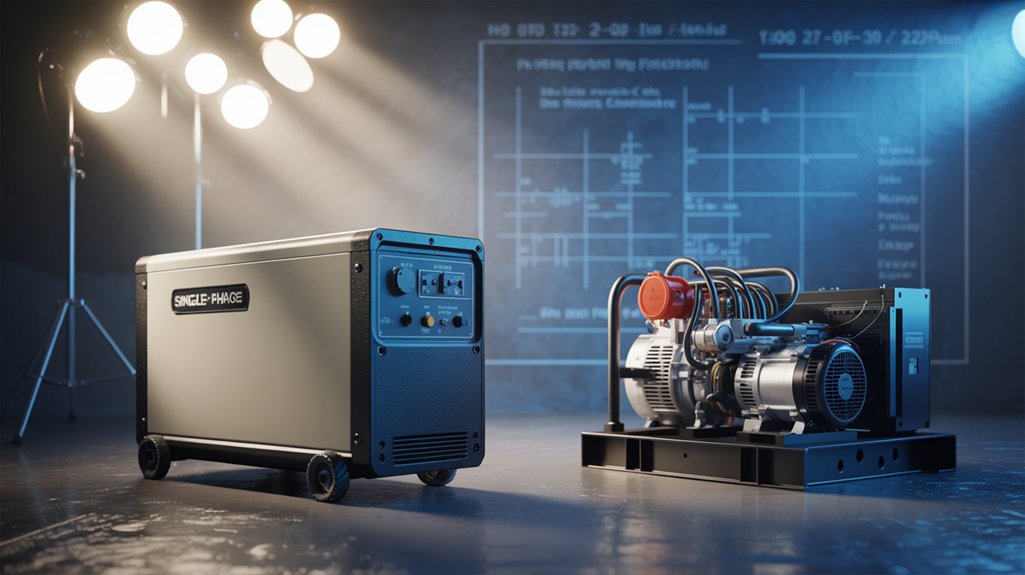
From matching the right generator to your job site’s pulse, understanding technical specs becomes your next power play.
Wattage? Critical. Can’t run your tools if you’re underpowered. Voltage requirements matter big time – single-phase hits 120/240V while three-phase cranks 208/480V. Know your equipment’s hunger.
Frequency stability’s another beast. Standard’s 60 Hz, but don’t get caught flat-footed. Amperage output determines what you’ll plug in.
Durability? Non-negotiable. Look for sturdy frames, solid copper windings, and cooling systems that won’t quit when things heat up.
Noise levels might make or break your site vibe. Portable versus stationary? Depends on your workflow. Some generators are loud enough to wake the dead – others whisper. Choose wisely.
Making the Right Generator Selection for Your Business
How do you nail the perfect generator for your business? It’s not rocket science, but you’ve gotta be smart about it. Your generator choice can make or break your work efficiency.
- Know your power requirements like the back of your hand
- Evaluate the job site’s electrical demands
- Match the generator to your specific equipment needs
Look, some guys overthink this. But here’s the deal: single-phase works for smaller tools and lighter jobs.
Three-phase? That’s your heavy-duty workhorse. It’ll handle bigger equipment without breaking a sweat.
Don’t cheap out. A wrong generator means downtime. Downtime means lost cash. Brutal, but true.
Matching the right generator isn’t just technical—it’s about understanding your workflow and the muscle your tools need to keep rolling.
