
Want to run high-draw tools on a portable generator without blowing something up? Know your watts. Starting watts for welders and compressors can spike 2-3 times higher than running watts. You’ll need a generator matching your toughest tool’s peak power demand. Check nameplate specs, do the math, and don’t overload your generator. One wrong move and you’ll fry your equipment—or worse. Stick around, and you’ll learn how to keep your job site humming.
Understanding Power Requirements for High-Draw Tools
When you’re hauling heavy-duty tools to a job site, power isn’t just a luxury—it’s survival. Generators aren’t created equal. Some can handle your beast of a welder. Some can’t.
You’ll need to know exactly what your tool demands in watts before plugging anything in. Starting watts? Running watts? Two totally different animals. Your table saw might need 4,000 watts to fire up, but only 3,000 to keep running. Compressors? Same deal.
Check the nameplate. Do the math. Blow this calculation, and you’ll fry your generator—or worse, your expensive tools. No contractor wants a dead power source mid-job.
Pro tip: Always calculate total watts by adding up every single tool you plan to run simultaneously. Precision matters.
Calculating Wattage: Starting vs. Running Load
Because electrical loads aren’t simple math, understanding the difference between starting and running watts can save your generator—and your wallet.
High-draw tools aren’t kindergarten arithmetic. You’ve gotta know the drill:
- Starting watts spike dramatically compared to running watts
- Most tools need 2-3x more power to kick into gear
- Welders, compressors, and table saws are power-hungry beasts
- Generator ratings matter more than you think
- Overloading means kissing your equipment goodbye
That massive difference? It’ll wreck your generator if you’re not paying attention. Manufacturers list both numbers for a reason.
Ignore them, and you’re basically throwing money into a bonfire. Bottom line: Check those specs before plugging anything in. Your gear depends on it.
Generator Types and Their Power Capacities
Depending on your power needs, generators come in more flavors than a roadside diner’s pie case.
Portable generators range from small 2,000-watt models to massive 10,000-watt beasts. You’ll find inverter generators that’re whisper-quiet and conventional models that sound like angry lawn mowers.
Inverter types? They’re clean power for sensitive electronics. Conventional generators? Tough workhorses for job sites.
Wanna run a welder? You’ll need serious watts. Small generators might give up faster than a rookie on his first construction job.
Bigger units pack more punch. They’ll handle table saws, air compressors, and power tools without breaking a sweat.
Just keep in mind: watts matter. Pick the wrong generator, and you’ll be that guy standing around with dead equipment. Not a good look.
Selecting the Right Generator for Specific Tools
After sizing up generator wattage like a power-hungry foreman, you’ll want to match your machine to the specific tools that’ll make or break your job.
Here’s how to nail the right generator:
- Check each tool’s starting and running wattage
- Verify total power draw before plugging in
- Look for surge capacity that handles tool spikes
- Reflect on motor types and their weird power quirks
- Don’t skimp on watts—underpowered generators kill productivity
Welders need serious juice.
Table saws? They’re power-hungry monsters.
Compressors? Total watt vampires.
You can’t just grab any random generator and expect miracles.
Gotta do your homework.
Know your tools.
Know their appetite.
Some machines will straight-up laugh at a weak generator.
Electrical math isn’t rocket science.
Add up those watts.
Plan smart.
No excuses.
Wiring and Electrical Connections Best Practices
When you’re hooking up generators, electrical connections aren’t a joke—one wrong move and you’ll be kissing safety goodbye. Seriously, don’t mess around with sketchy wiring. Double-check every connection. Loose wires? Bad news.
Make sure your generator’s rated for the tools you’re running. Some high-draw equipment needs serious juice. Ground everything properly—no shortcuts. You’ll want heavy-duty extension cords rated for your specific tools. No wimpy hardware store specials.
Inspect cord insulation before plugging in. Frayed or damaged? Trash it. Keep connections dry and clean. Moisture’s your enemy here.
Pro tip: Use cable ties to secure wiring and prevent accidental disconnects. Overloading circuits is for amateurs. Know your generator’s limits. One spark can torch your whole setup—or worse, you.
Managing Voltage Drop and Performance Optimization
As voltage drop can kill your generator’s performance faster than a sledgehammer through drywall, you’ll want to get smart about managing electrical resistance. Your portable generator’s got limits, and pushing those limits is a recipe for burnout.
Critical tactics for performance optimization:
- Keep cable lengths short and thick
- Use proper gauge wire matching tool requirements
- Check connections for corrosion and tightness
- Monitor voltage under load constantly
- Avoid daisy-chaining extension cords
Resistance is the silent killer of generator efficiency. Long, skinny cables? Bad news. Loose connections? Even worse.
You’re basically strangling your generator’s potential when you ignore these basics. Every inch of wire counts. Every connection matters. Performance isn’t just about the generator—it’s about how intelligently you set up your electrical infrastructure.
Don’t be that guy with the struggling power setup.
Safety Considerations for Heavy-Duty Tool Operations
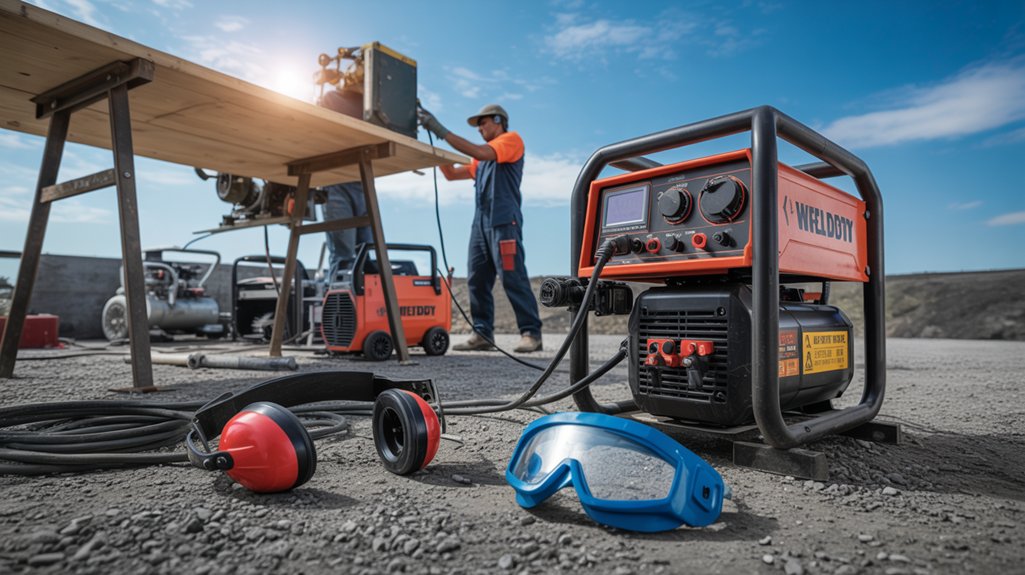
As electrical tools can turn your worksite into a danger zone faster than you can say “oops,” safety isn’t just a checklist—it’s survival. When running heavy-draw tools on generators, you’ve gotta stay sharp. One wrong move could fry your equipment or worse, torch yourself.
| Safety Gear | Why It Matters |
|---|---|
| Gloves | Prevent electrical burns |
| Safety Glasses | Block flying debris |
| Ear Protection | Reduce generator/tool noise |
| Grounded Footwear | Prevent electrical shock |
| Fire Extinguisher | Emergency backup plan |
Watch your generator’s load capacity. Push it too hard, and you’ll be looking at a smoking paperweight. Keep connections tight. Check cables for wear. No frayed wires—period. Ground everything properly. Seriously. One slip-up means potential electrocution. Stay alert, stay safe. Your life depends on it.
Maintaining Your Generator for Peak Performance
Regular maintenance isn’t just some fancy suggestion—it’s the lifeline of your generator, keeping it humming like a well-oiled machine.
Listen up, as this isn’t rocket science, just basic generator care that’ll save your butt in the long run.
- Change oil regularly—don’t be lazy
- Clean air filters like your work depends on it
- Check spark plugs for wear and tear
- Inspect fuel lines for cracks or damage
- Store generator in dry, clean space
Generators are tough, but they ain’t invincible. Neglect ’em, and they’ll die faster than a cheap power tool.
Treat your generator right, and it’ll power your job site without throwing a tantrum. No fancy talk—just straight-up maintenance that keeps your gear running smooth.
Generators are workhorses, not show ponies. Maintain ’em, respect ’em, and they’ll never let you down.
Common Mistakes to Avoid When Using Generators
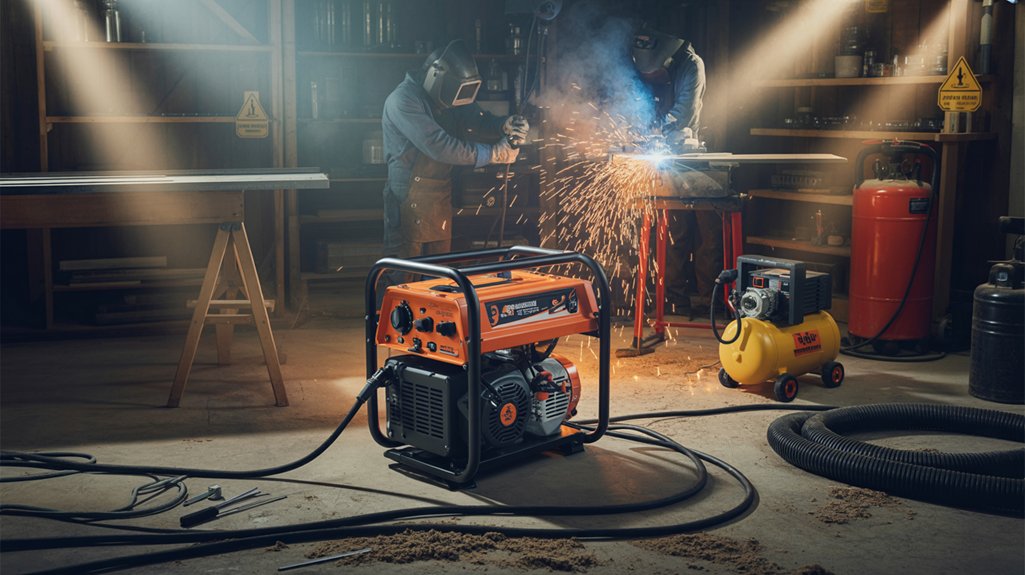
While generator mishaps can turn your job site into a disaster zone, knowing what not to do can save your bacon. Rookie mistakes cost big time. Don’t overload your generator or run high-draw tools without checking watts. Seriously.
| Mistake | Consequence |
|---|---|
| Ignoring Load Capacity | Generator Failure |
| No Proper Ventilation | Carbon Monoxide Risk |
| Skipping Maintenance | Shortened Equipment Life |
| Wet Environment Use | Electrical Shock Danger |
| Wrong Cord/Connection | Potential Equipment Damage |
Generators aren’t toys. They’re serious machines that demand respect. Underestimate them, and you’ll regret it fast. Check your equipment’s draw before plugging in. Understand your generator’s limits. Keep it dry. Keep it maintained. No shortcuts. No excuses. Your safety and your tools depend on smart, careful operation. Period.
Troubleshooting Generator and Tool Power Issues
When power problems strike your generator or tools, you’ve got trouble brewing. Electrical gremlins can wreck your whole workday faster than a dropped hammer. Check these critical troubleshooting steps:
- Verify generator wattage matches tool requirements
- Inspect power cords for visible damage or fraying
- Test voltage output with a reliable multimeter
- Examine circuit breakers and reset if tripped
- Confirm proper grounding and connection points
Generators aren’t rocket science, but they’ll bite you if you’re not paying attention. Weird electrical hiccups happen.
Sometimes it’s a simple fix—like a loose connection or dirty spark plug. Other times? You’re looking at more complex issues that’ll make you want to chuck the whole setup across the jobsite.
No mercy for equipment that won’t cooperate. Stay sharp, stay focused, and don’t let power problems slow you down.
