
Protect your generators like your job depends on it, because it does. Thieves target isolated construction sites, eyeing unguarded equipment like easy cash. Lock down those machines with heavy-duty chains, install motion sensors, and use GPS trackers. Train your crew to stay alert and report sketchy activity. Don’t let criminals turn your worksite into their personal equipment shop. Stick around, and you’ll uncover more site security secrets.
The Real Cost of Generator Theft
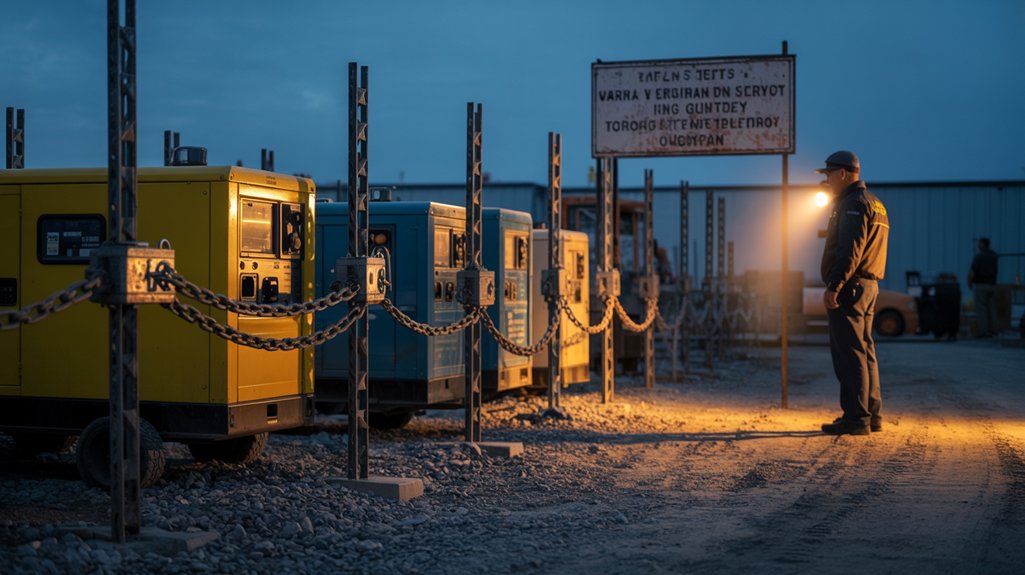
Construction sites are like walking wallets for thieves, and generators are their favorite cash machine. These heavy-duty machines aren’t just expensive—they’re pure gold for criminals looking to make a quick buck.
One stolen generator can set you back thousands, and that’s before you factor in project delays and replacement hassles. It’s not just about the hardware; it’s the downtime that really hurts. Imagine your entire crew standing around, twiddling their thumbs, while you scramble to replace critical equipment.
Insurance might cover some costs, but the real pain is the lost productivity. Some sites lose multiple generators annually, turning theft into a serious operational nightmare.
Bottom line: generator theft isn’t just a nuisance—it’s a financial gut punch that can derail entire projects.
Understanding Theft Risk Factors
While every job site looks different, some stick out like sore thumbs when it comes to generator theft risks. Isolated locations? Major red flag. Remote sites with minimal supervision become prime targets for equipment bandits.
Construction zones near high-crime neighborhoods or industrial areas amplify potential theft. Generators sitting exposed, without secure barriers or lighting? You’re basically inviting trouble.
Temporary work sites lacking consistent personnel presence create perfect opportunities for quick equipment heists. Valuable generators left unattended overnight become easy pickings.
Unsecured perimeters and minimal security measures practically scream “steal me” to opportunistic thieves. Poor visibility, lack of surveillance, and minimal deterrent systems transform your expensive equipment into low-hanging fruit.
Want to keep your generators? Start recognizing these vulnerability triggers before someone else does.
Physical Security Barriers and Strategies
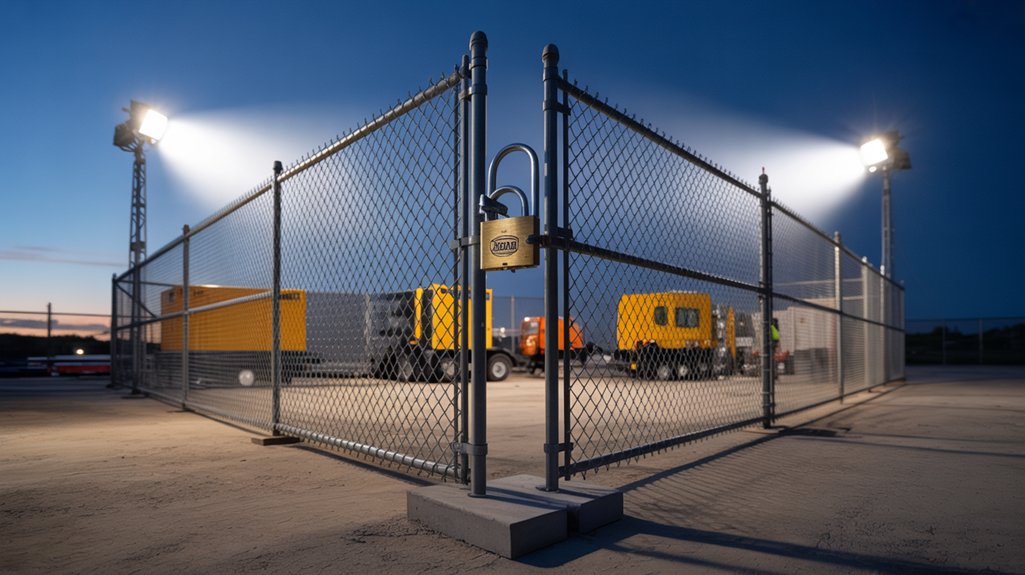
If you’ve got generators that scream “steal me,” it’s time to get serious about physical barriers. Protecting your equipment isn’t rocket science, but it does take some strategic thinking and muscle.
- Lock that bad boy down like Fort Knox
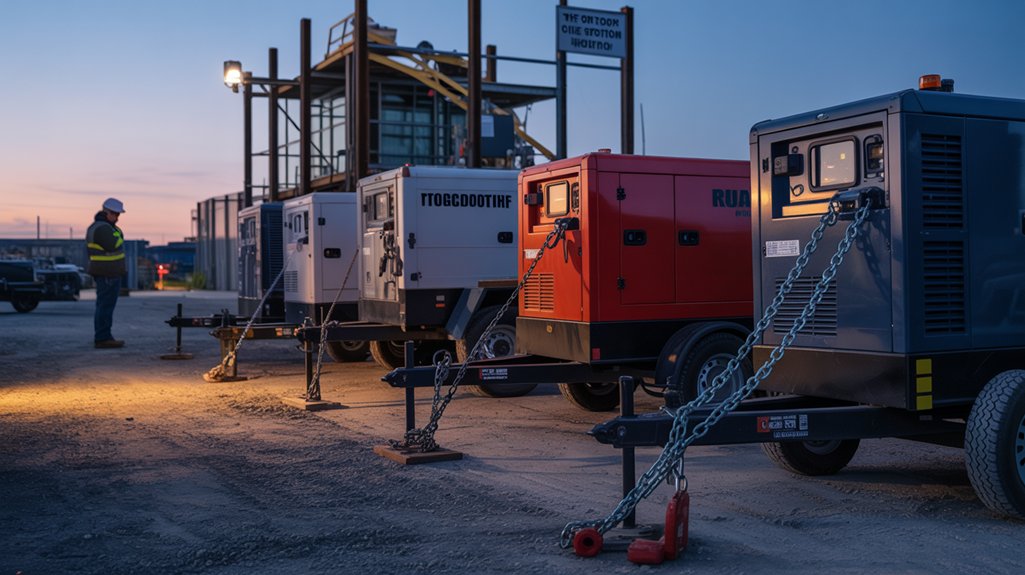
- Use heavy-duty chains that laugh at bolt cutters
- Install motion-sensor lights that’ll make thieves wet their pants
- Create a perimeter that says “not today, punk”
- Secure generators to immovable objects with industrial-strength hardware
Seriously, don’t make your generator an easy target. Criminals love low-hanging fruit, and you don’t want to be that guy who loses thousands in equipment due to being too lazy to implement basic security.
Smart moves now prevent massive headaches later. No fancy tricks needed—just solid, no-nonsense protection that sends a clear message: this site’s locked down tight.
Advanced Tracking and Monitoring Technologies
How do you keep tabs on equipment that might grow legs and walk away? GPS tracking‘s your new best friend.
Slap a small tracker on your generator, and you’ll know exactly where it’s chillin’ at any moment. These little tech wizards connect to your phone, giving real-time location updates.
Some systems even send alerts if your gear moves outside a designated zone. Seriously cool stuff. Geofencing technology means you’ll get an instant notification if someone tries to swipe your equipment.
Imagine catching a thief red-handed since your tracker ratted them out. Cellular and satellite tracking alternatives mean you’re covered whether you’re in the city or out in the boonies.
No more wondering where your expensive gear disappeared to.
Employee Training and Awareness Programs
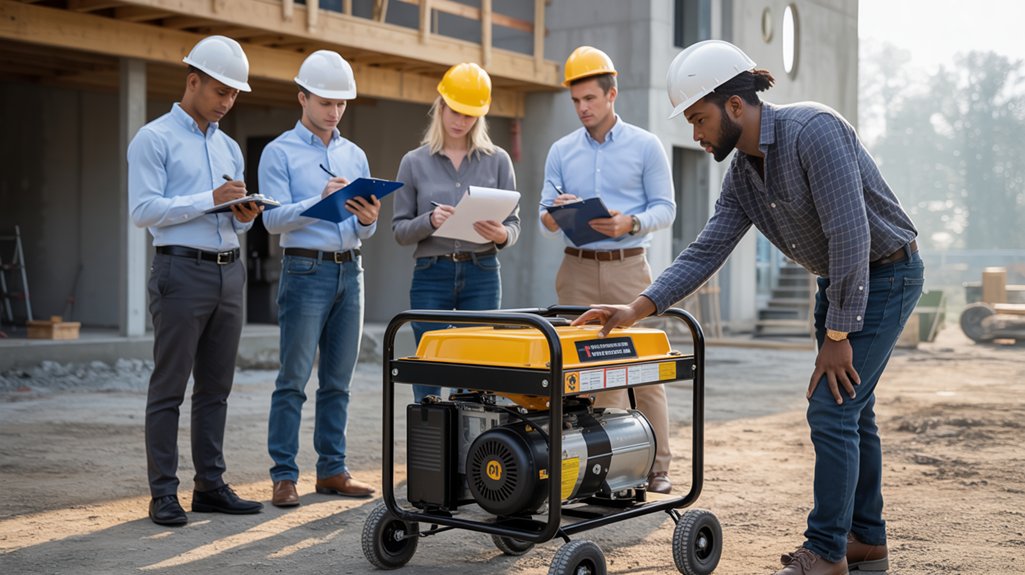
As job-site theft is a real pain in the neck, smart crews know prevention starts with the people on the ground.
You’ll need to train your team to be vigilant and proactive about protecting expensive equipment. Generators don’t guard themselves.
Key awareness points include:
- Your eyes are the best security system – stay alert
- Thieves love easy targets, so don’t make it simple for them
- Communication between crew members can stop potential theft
- Know your equipment’s serial numbers and markings
- Document everything suspicious you see or hear
Crew awareness isn’t rocket science.
It’s about staying sharp and calling out weird behavior. One set of watchful eyes can save thousands in replacement costs.
No generator walks away if everyone’s paying attention. Keep it tight, keep it right.
Strategic Generator Placement Techniques
After training your crew to spot potential theft risks, positioning your generator becomes the next line of defense.
Smart placement means tucking that expensive piece of equipment where thieves can’t easily grab it. Hide it where visibility’s low, but your team can still access it quickly. Block potential escape routes with other equipment or create natural barriers.
Contemplate chaining the generator down, making it a serious pain to swipe. Obscure it from street view, but keep it within sight of workers.
No fancy tricks—just common sense positioning that makes stealing a total hassle. Darkness and obstacles are your friends. Think like a thief, block their path. Your generator isn’t a welcome mat for opportunistic criminals.
Insurance and Documentation Best Practices
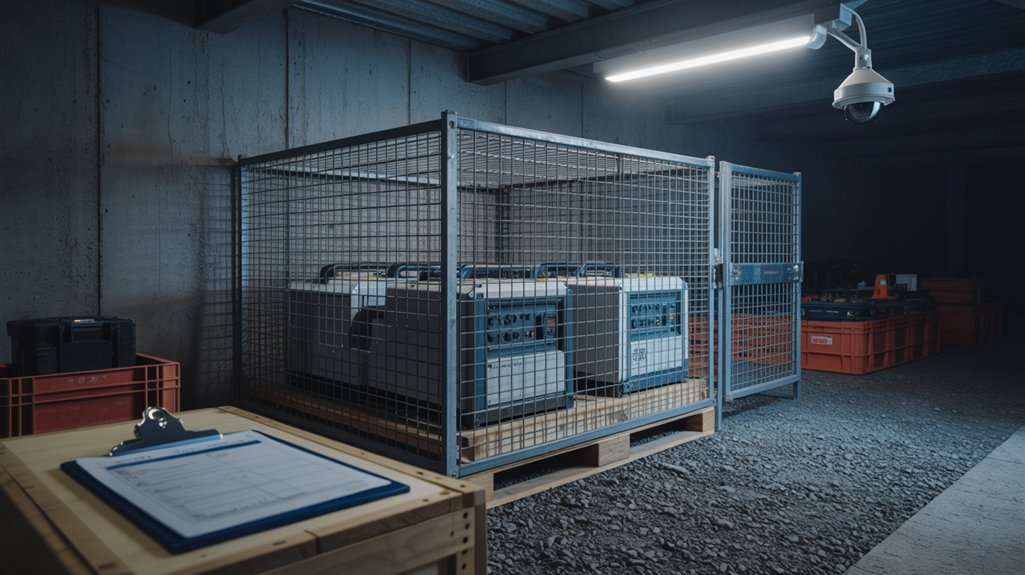
While job-site theft can drain your wallet faster than a leaky hydraulic line, proper insurance and documentation aren’t just paperwork—they’re your financial lifeline.
Protecting your generators means more than just locks and alarms. It’s about creating a bulletproof record that’ll save your bacon if someone swipes your gear. Know what you’ve got. Prove you owned it. Cover your bases.
Key documentation strategies:
- Photograph every single piece of equipment
- Keep serial numbers in a secure digital backup
- Maintain detailed purchase receipts
- Log equipment movements and locations
- Update insurance policies annually
Theft happens. It’s ugly. But with rock-solid documentation, you’re not just a victim—you’re prepared. Your insurance claim becomes less of a headache and more of a clear-cut transaction. No drama. Just facts.
Legal Considerations and Reporting Protocols
Every construction site’s legal nightmare starts with three critical steps when equipment vanishes: documentation, reporting, and understanding your rights.
You’ve got stolen gear? Better start making noise fast. Police reports matter. Insurance claims depend on solid evidence. Take photos immediately. Note serial numbers. Gather witness statements if possible.
Don’t wait around hoping someone’ll magically return your stuff. Most theft cases need documentation within 24-48 hours to be taken seriously. Local law enforcement wants specifics—they can’t chase shadows.
Your site supervisor needs to know ASAP. Some jurisdictions have specific reporting requirements for construction equipment theft. Cops won’t do your homework. Protect yourself with quick, thorough reporting. No excuses.
Recovery and Mitigation Strategies After Theft
Police reports filed? Don’t sit around twiddling your thumbs. Time’s ticking, and every minute counts when tracking down stolen gear.
- Your hard-earned equipment – gone in a flash
- Frustration boiling over like a busted radiator
- Gut-punch of financial loss hitting hard
- Insurance claim nightmare looming
- Anger burning brighter than a welding torch
Listen up. Document everything. Take photos. Get serial numbers. Check local pawn shops and online marketplaces.
Your generator didn’t walk away by itself. Some low-life thought they could jack your stuff. Not on your watch.
Contact local law enforcement immediately. Be persistent. Follow up. Network with other job sites – they might’ve seen something.
No guarantees you’ll get your equipment back, but doing nothing? That’s a guaranteed zero.
