
To nail your generator size, you’ve got to do more than glance at the nameplate. List out every piece of equipment, calculate its starting and running watts—electric motors can spike 3-7 times their rated current. Factor in voltage drop, environmental conditions, and those brutal startup surges. Don’t get caught short. Overestimate your power needs. Want the full breakdown? Stick around.
Understanding Generator Load Calculations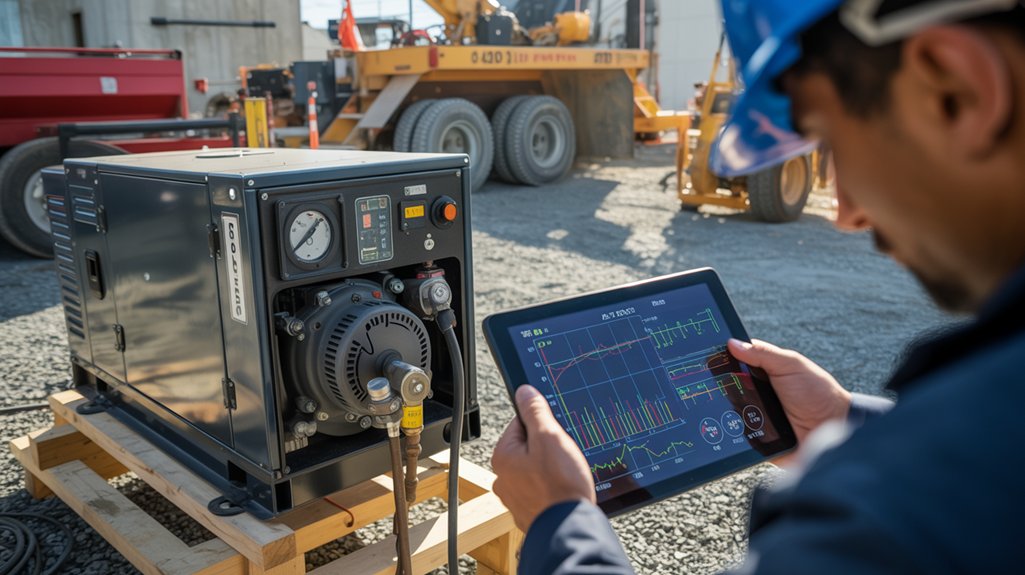
When you’re setting up power for a job site, generator load calculations aren’t just some boring math—they’re the difference between keeping your tools running and sitting around with your thumb twiddled.These calculations help you understand exactly how much electrical juice you’ll need. It’s not rocket science, but it matters big time.
You’ve got to look at every single piece of equipment’s wattage requirements. Start by listing out your tools: saws, drills, compressors, lights.Add up their starting and running watts. Pro tip: starting watts are way higher than running watts. Surge loads can crush an undersized generator faster than a bulldozer through drywall.
Miss these details, and you’re looking at a dead site and zero productivity. Power planning isn’t discretionary—it’s survival.
Power Factor and Voltage Drop Analysis
After crunching those starting and running watts, you’ll want to understand how power actually moves through your generator setup.Power factor isn’t just some nerdy math concept—it’s the real deal in generator performance. Basically, it measures how efficiently electrical power converts to actual work. Think of it like muscle efficiency: not all energy becomes pure power.
Voltage drop? That’s another beast. As electricity travels through cables and connections, it loses some punch. Longer cable runs mean more energy loss.
Real talk: your generator might look impressive on paper, but real-world performance can tank fast. Temperature, wire quality, and connection integrity all play huge roles.Don’t assume nameplate ratings tell the whole story—they’re just a starting point in the generator game.
Starting Current Requirements for Heavy Equipment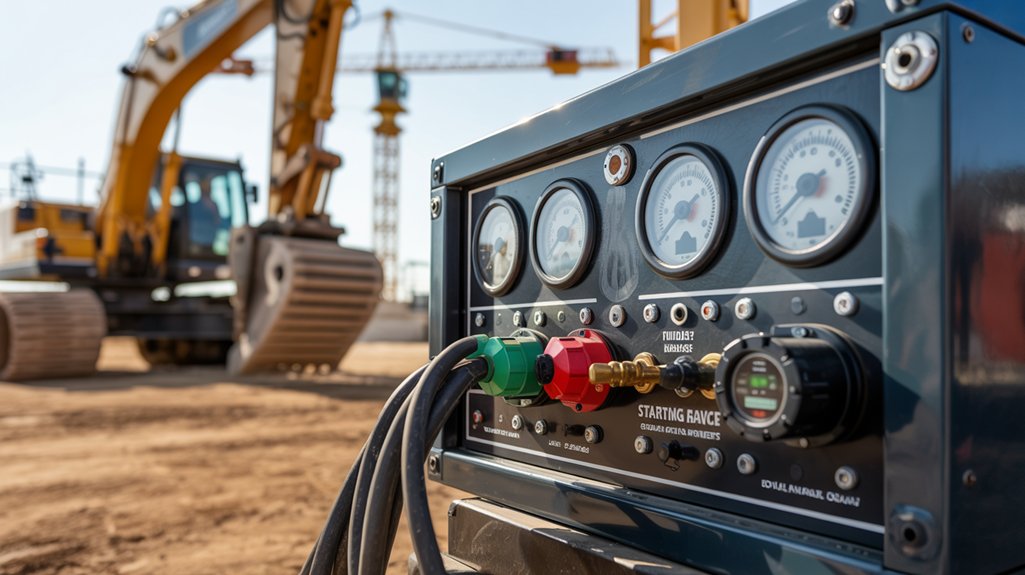
Most heavy-duty construction equipment demands a serious electrical kick just to get rolling.We’re talking massive startup currents that’ll make your generator sweat. Electric motors for excavators, cranes, and bulldozers require 3-7 times their rated running current when first firing up.Startup surge? Real deal. Your typical generator’s gotta handle these monster spikes without puking out.Think winching, drilling, lifting – each machine brings its own electrical drama.Don’t get caught flat-footed with an undersized generator. Compressors and welders? Total current hogs. They’ll laugh at your puny power supply.Startup current isn’t just a number – it’s the difference between a jobsite humming and everything grinding to a frustrating halt.Electrical math isn’t sexy, but it keeps the big iron moving.
Practical Methods for Site-Specific Power Estimation
As every construction site’s power needs are as unique as a snowflake in a blizzard, you’ve gotta nail down your specific electrical requirements before anything else.Walk your site. List every piece of equipment. Calculate their wattage. Not rocket science, just basic math.You’ll want to total up running watts, then factor in those nasty startup surges most equipment pulls.
Pro tip: Always overestimate. Better to have too much juice than come up short mid-project.Electrical loads vary wildly—from tiny hand tools to massive excavators.
Some gear needs three times its rated wattage just to kick into gear.Spreadsheets are your friend here. Break down each machine’s power draw. Add ’em up. Round up generously.No room for guesswork when electricity’s on the line. Precision matters.
Selecting the Right Generator for Complex Construction Environments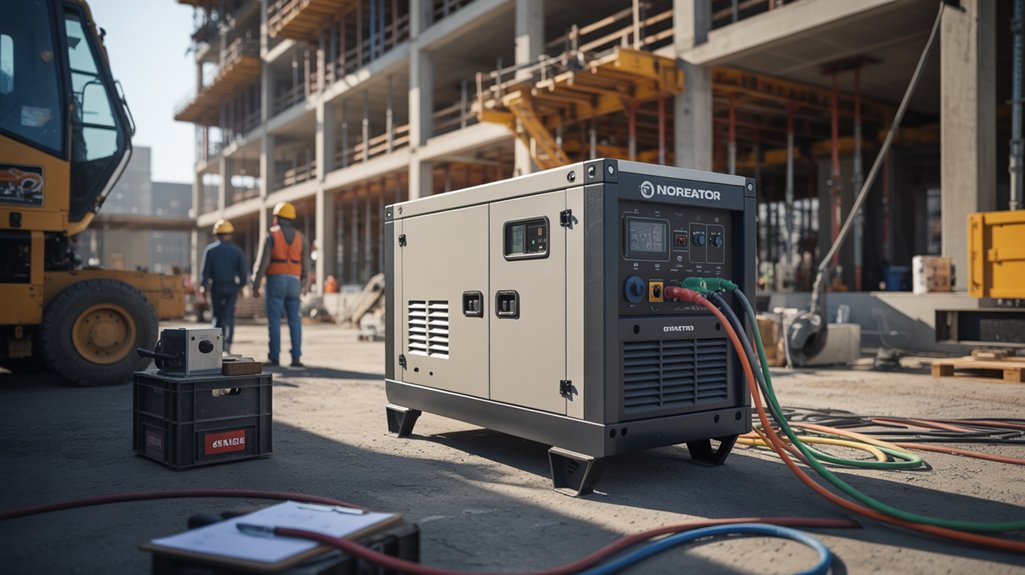
How do you wrangle the right generator when your construction site looks like an electrical complexity bomb just exploded?
| Site FactorGenerator ImpactEnvironmental ConditionsPower DeratingLoad DiversityCapacity RequirementsEquipment MixPerformance Constraints |
|---|
You’ve got multiple machines, crazy voltage demands, and zero room for electrical failures. Seriously. Different equipment needs different juice. Voltage sensitivity matters. Some machines are power-hungry monsters that’ll drain generators faster than a beer at a Friday happy hour.Pro tip: Don’t just look at nameplate ratings. Those numbers are marketing fairy dust. Real-world performance is brutal. You need a generator that can handle sudden spikes, weird loads, and construction site chaos. No mercy. No compromise. Just pure, reliable electrical muscle.
