
When you’re building a new home, you’ll need serious generator power. Grab a professional-grade generator between 5000-10000 watts—diesel works best for heavy-duty sites. Keep it 20 feet from work areas, level on stable ground. Don’t skimp on fuel; stock up before starting and use stabilizers for long-term storage. Rental generators can save cash if you match size precisely to your job needs. Stick around, and you’ll reveal more power secrets.
Essential Power Requirements for Construction Sites

How do you keep a construction site powered up and running smooth? You’ll need a solid generator setup that can handle the job.
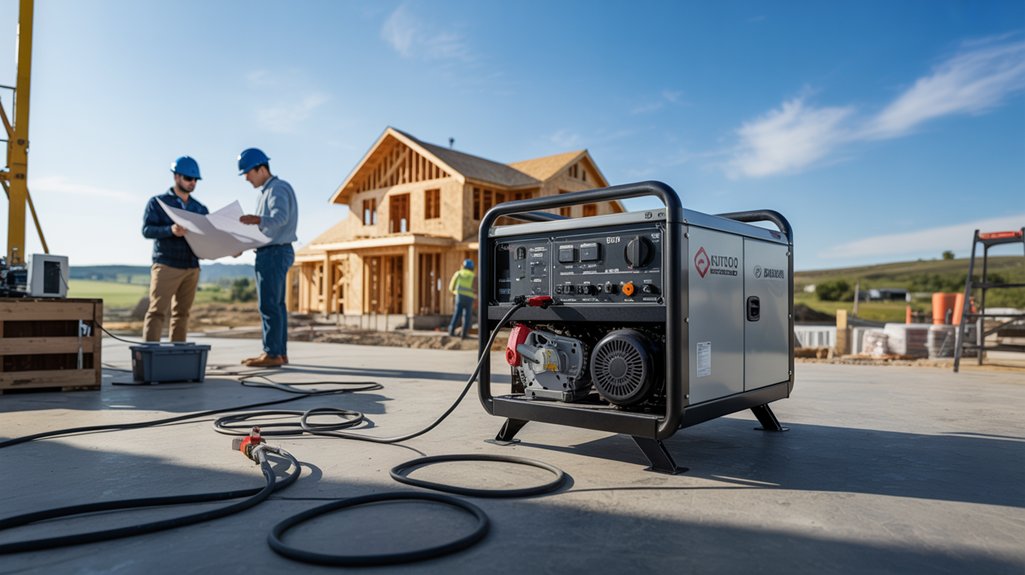
Electrical tools don’t run on wishful thinking. Portable generators become your lifeline, providing critical power for everything from circular saws to compressors. You’ll want something sturdy that can handle multiple tools simultaneously.
Wiring matters – don’t cheap out on connection points. Professional-grade generators typically range from 5000 to 10000 watts, depending on your specific site needs. Some sites require multiple units to distribute power effectively.
Electrical demands can spike quickly with welding equipment, heavy-duty drills, and other power-hungry machines. Smart contractors plan ahead, ensuring generator capacity matches projected workload.
No room for guesswork when deadlines are tight and budgets are watching.
Selecting the Right Generator Type and Size
When powering up a new build, your generator choice can make or break the entire project. Not all generators are created equal, and you’ll need to match power needs precisely. Watts matter big time.
Take into account voltage requirements, load capacity, and fuel type before pulling out your wallet. Diesel generators pack serious punch for heavy-duty sites, while portable gas units work for smaller jobs.
Don’t skimp on power – running out mid-project is a nightmare. Rental generators can bail you out in a pinch, but owning gives you more control.
Pro tip: Calculate total wattage needed by adding up tools, equipment, and site lighting. Size matters. Too small? You’re dead in the water. Too big? You’re wasting cash.
Find that sweet spot of generator performance that keeps your construction humming.
Proper Generator Placement and Safety Protocols

Because generator placement can mean the difference between a smooth construction site and a total disaster, you’ve got to get this right.
Listen up: your generator isn’t just some random piece of equipment you dump anywhere. Location matters big time.
- Keep generators at least 20 feet from your construction site with exhaust pointing away from work areas
- Verify level ground with solid, stable surface to prevent tipping or weird vibration issues
- Protect generator from direct rain, snow, and extreme weather conditions that’ll mess with its performance
Seriously, carbon monoxide is no joke. One wrong move and you’re risking worker safety.
No ventilation? Bad news. No protection from elements? Equipment failure waiting to happen.
Think smart. Place strategically. Stay safe. Construction doesn’t pause for equipment failures or medical emergencies.
Position that generator like you mean business.
Fuel Management and Operational Efficiency
If you’re serious about keeping your generator running like a well-oiled machine, fuel management isn’t just a checkbox—it’s survival.
Your generator’s heartbeat depends on smart fuel choices. Diesel? Propane? Gas? Each has pros and cons. Stock up before the job starts. Never run empty—that’s amateur hour.
Watch your fuel levels like a hawk. Rotating your fuel supply prevents stagnation and keeps things fresh. Store it right: cool, dry place. No moisture. No contamination.
Fuel stabilizers are your friend when storing long-term. Keep containers sealed. Check expiration dates. Performance matters more than quantity. A clean fuel system means fewer headaches.
No one wants a generator dying mid-project. Trust me, I’ve been there. Fuel management isn’t rocket science—just pay attention.
Cost-Effective Temporary Power Strategies
After wrestling with fuel logistics in your generator setup, smart contractors know temporary power isn’t just about having juice—it’s about having smart, budget-friendly solutions.
Cost matters when you’re burning through construction timelines. Your power strategy needs to be lean and mean. No room for waste. No patience for expensive mistakes.
Key factors for budget-conscious temporary power:
- Rental generators with flexible terms beat buying outright
- Matching generator size precisely to job site needs prevents overpaying
- Negotiating bulk rental rates can slash per-day expenses
Portable units rock when you’re pinching pennies. They’re compact, versatile, and won’t murder your project budget.
Just plug in, fire up, and get to work. No fancy bells and whistles—just pure, no-nonsense electrical output that keeps your site humming and your wallet intact.
Efficiency is the name of the game.
