
Carbon monoxide’s a killer on job sites. You’ve got combustion engines, welding gear, and generators turning work zones into potential death traps. No smell. No color. Creeps up fast. It’ll replace oxygen in your lungs before you know it, causing headaches, dizziness, and worse. Your best defense? Killer ventilation, strategic exhaust fans, portable CO detectors, and keeping equipment away from breathing spaces. Wanna know how deep this rabbit hole goes? Keep scrolling.
Understanding Carbon Monoxide’s Silent Threat
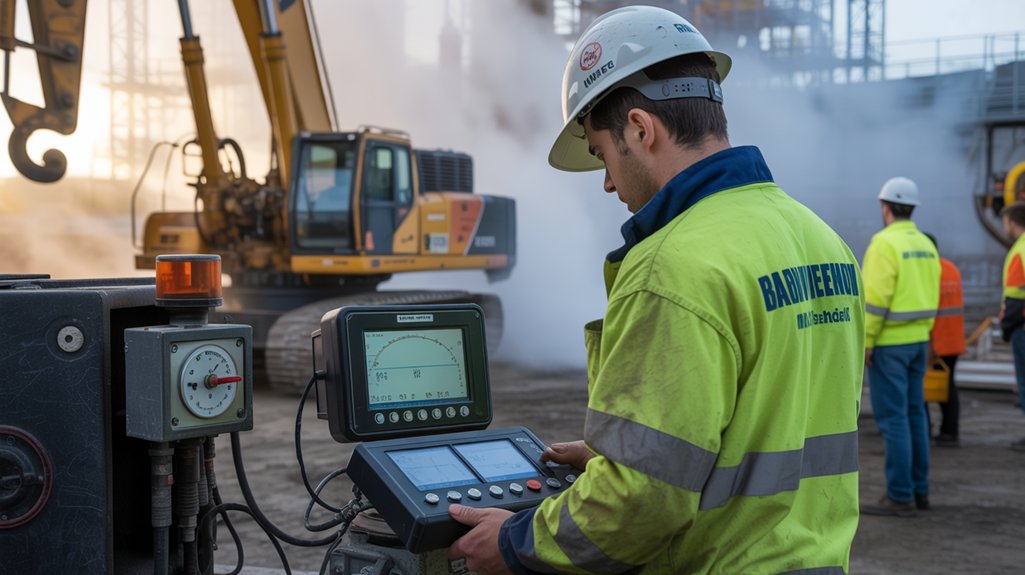
Ever wonder what makes carbon monoxide such a deadly job site hazard?
It’s a sneaky killer, odorless and colorless. No warning. No smell. Just silent destruction.
When combustion engines, welding equipment, or generators run in tight spaces, they pump out this invisible menace. Your lungs can’t tell the difference between CO and oxygen, so it slides right in, replacing the good stuff. Bad news. One breath can mess you up. Seriously.
Your body starts starving for oxygen, and cells begin dying. Workers don’t realize they’re in trouble until it’s too late. Symptoms creep up: headaches, dizziness, weakness.
Then boom – potential brain damage or death. Construction sites are CO danger zones. Enclosed spaces. Machinery everywhere. No joke. This stuff’s no playground.
High-Risk Industries and Workplace Exposures
When it comes to carbon monoxide risks, some job sites are way more dangerous than others. Construction, welding, and manufacturing zones top the list of CO danger zones. You’re looking at serious exposure risks in tight, poorly ventilated spaces where gas-powered equipment runs hot.
| Industry | CO Risk Level |
|---|---|
| Construction | High |
| Automotive | Moderate |
| Manufacturing | High |
| Agriculture | Low |
Firefighters and emergency workers? They’re constantly dancing with invisible death. Generators, forklifts, furnaces – these machines are silent killers. Workers without proper ventilation or monitoring are basically playing Russian roulette with their lungs. No joke. Exhaust systems matter. Confined spaces multiply the risk. Some sectors are like walking through a toxic fog, and you’d better believe CO doesn’t play nice. Stay sharp. Stay aware.
Mechanisms of Carbon Monoxide Poisoning
As carbon monoxide‘s a sneaky little devil, understanding how it wrecks your body starts with knowing its brutal molecular game. This toxic gas does serious damage through some gnarly mechanisms:
- It binds to hemoglobin way more aggressively than oxygen
- Blocks your cells from using oxygen effectively
- Creates nasty inflammatory responses in your tissues
- Triggers cellular damage at a mitochondrial level
Your blood basically becomes a useless transport system when carbon monoxide crashes the party. Hemoglobin gets hijacked, leaving your organs starved and struggling. Oxygen can’t do its job. The result? Tissues start dying.
Your brain? First in line for the damage. And unlike other poisons, carbon monoxide doesn’t play nice. It’s silent. Invisible. Deadly. One minute you’re working, the next you’re in serious trouble. No warning. No mercy.
Recognizing Early Warning Signs
Because carbon monoxide’s a silent killer, you’ve got to know its sneaky symptoms before they knock you sideways.
First signs? Feeling woozy, dizzy, or like your head’s spinning after working near equipment burning fuel. Your body’ll start sending warning signals – headaches that won’t quit, weird muscle weakness, sudden nausea.
Don’t ignore these red flags. They’re your internal alarm system screaming something’s wrong. Some workers get confused or feel super tired, which can mess with your job performance and safety.
These symptoms might seem minor, but they’re extremely dangerous. Carbon monoxide’s no joke. It can take you down fast, blocking oxygen to your brain and essential organs.
Stay alert. Watch yourself and your crew. Your life depends on catching these signals early.
Engineering Ventilation and Exhaust Control
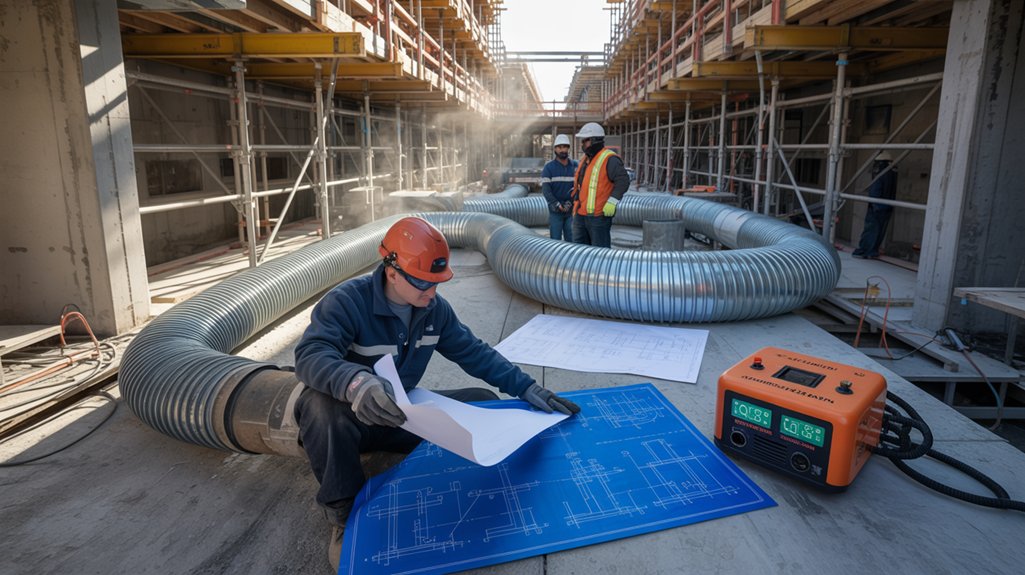
Three key strategies make job site ventilation your best defense against carbon monoxide‘s deadly game.
You’ve got serious risks when machinery’s running and enclosed spaces trap those invisible killer gases.
Key ventilation tactics include:
- Install high-volume exhaust fans at strategic points
- Create cross-ventilation pathways through work zones
- Use portable carbon monoxide detectors with loud alarms
- Position mechanical equipment away from worker breathing areas
No joke – proper airflow can literally save your life.
Stagnant air becomes a death trap faster than you’d think. Your lungs don’t care about budget constraints or tight schedules.
Weak ventilation means you’re basically inviting a silent, odorless assassin onto the job site.
Smart crews prioritize air movement like it’s their most critical safety tool. For it is.
Advanced Monitoring and Detection Technologies
When carbon monoxide wants to play dirty on your job site, advanced detection tech becomes your heavyweight champ of safety.
These bad boys aren’t your grandpa’s old gas detectors. Modern sensors can track CO levels in real-time, sending instant alerts before trouble gets serious. You’ll see wireless systems that communicate across entire work zones, pinpointing exactly where dangerous concentrations are building up.
Some cutting-edge devices now integrate smartphone connectivity, meaning you’ll get warnings right on your phone – no excuses for missing potentially deadly gas buildup. Portable detectors with digital displays make monitoring simple.
Ruggedized for harsh environments, these tech marvels can survive drops, dust, and extreme temperatures. They’re basically the Navy SEALs of safety equipment – tough, reliable, and always on guard.
Personal Protective Equipment Strategies
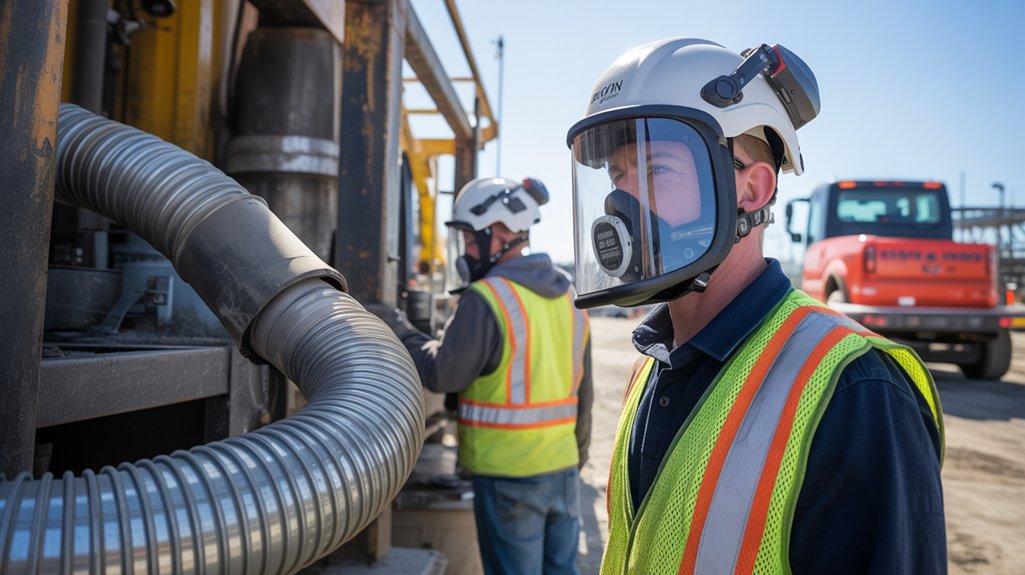
If you’re working around carbon monoxide, your personal protective equipment (PPE) isn’t just gear – it’s your lifeline. Your safety depends on smart choices and the right equipment.
You’ve got to protect yourself from this invisible killer.
Critical PPE strategies include:
- Wear a reliable, well-fitted carbon monoxide detector
- Use NIOSH-approved respirators with appropriate filters
- Invest in quality, sealed protective clothing
- Make certain proper ventilation equipment is always operational
No jokes here – carbon monoxide doesn’t play. One wrong move and you’re done. Seriously.
Proper PPE means the difference between going home or being a statistic. Don’t skimp. Don’t cut corners. Your life’s worth more than saving a few bucks on cheap gear.
Stay alert. Stay protected. Stay alive.
Training and Safety Protocol Development
Personal protective equipment is solid, but without proper training, you’re still walking into a death trap. CO doesn’t play.
You need protocols that aren’t just paper-pushing garbage. Thorough safety training means understanding gas detection, recognizing symptoms, and knowing evacuation routes cold. Workers can’t just guess – they need concrete steps.
Rehearse emergency scenarios. Learn detector placement. Understand ventilation requirements. Your team’s survival depends on knowing exactly what to do when alarms trigger.
Some guys think they’re invincible. They’re not. One missed warning sign could mean lights out. Smart crews develop muscle memory through repeated drills.
No fancy talk. No complicated jargon. Just clear, direct instruction that sticks when panic wants to take over. Training isn’t optional. It’s survival.
Emergency Response and Medical Intervention
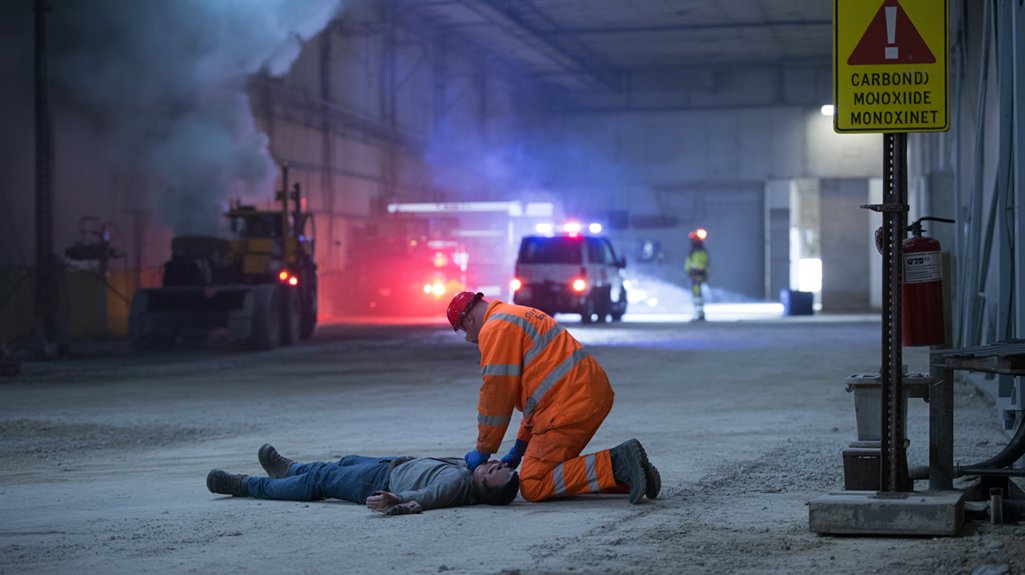
As carbon monoxide doesn’t announce its deadly intentions, knowing emergency response protocols could mean the difference between life and death on a job site.
When CO strikes, you’ve gotta be ready. Quick action saves lives. Here’s what you need to know:
- Immediately evacuate the contaminated area
- Call emergency services and report carbon monoxide exposure
- Perform CPR if the victim is unconscious and not breathing
- Administer 100% oxygen using a non-rebreather mask if available
Serious stuff, right? CO doesn’t play. One minute you’re working, the next you’re fighting for survival. No joke.
Medical pros will assess lung damage, check oxygen levels, and potentially use hyperbaric oxygen therapy. Your body’s oxygen absorption gets wrecked by this invisible killer.
Don’t mess around. Be alert. Stay sharp. Lives depend on your response.
Legal and Regulatory Compliance Frameworks
When workers sprawl unconscious from carbon monoxide poisoning, someone’s gonna get sued. OSHA’s got rules, and they don’t mess around when it comes to workplace safety.
Employers are on the hook for keeping job sites carbon monoxide-free. Violations mean serious cash penalties and potential criminal charges. Regulatory frameworks aren’t just paperwork—they’re life-or-death guardrails.
Construction sites, manufacturing plants, confined spaces? They’re all under the microscope. Inspectors’ll write you up faster than you can say “safety violation.” Compliance isn’t a choice. It’s mandatory.
Documentation matters. Incident reports. Safety logs. Training records. One slip-up can cost you everything. Fines can crush a small business. Lawsuits can destroy a reputation.
And let’s be real—no amount of legal jargon fixes a dead worker.
